Oplium
Events
Cybersecurity and Systemic Impact: Lessons from the Oplium Panel at MTS 2025
By Adonias Filho, CCO of Oplium
We live in a deeply interconnected world. Today, cybersecurity is not just a technological issue, but a strategic topic that directly impacts the economy, public trust, and the well-being of society.
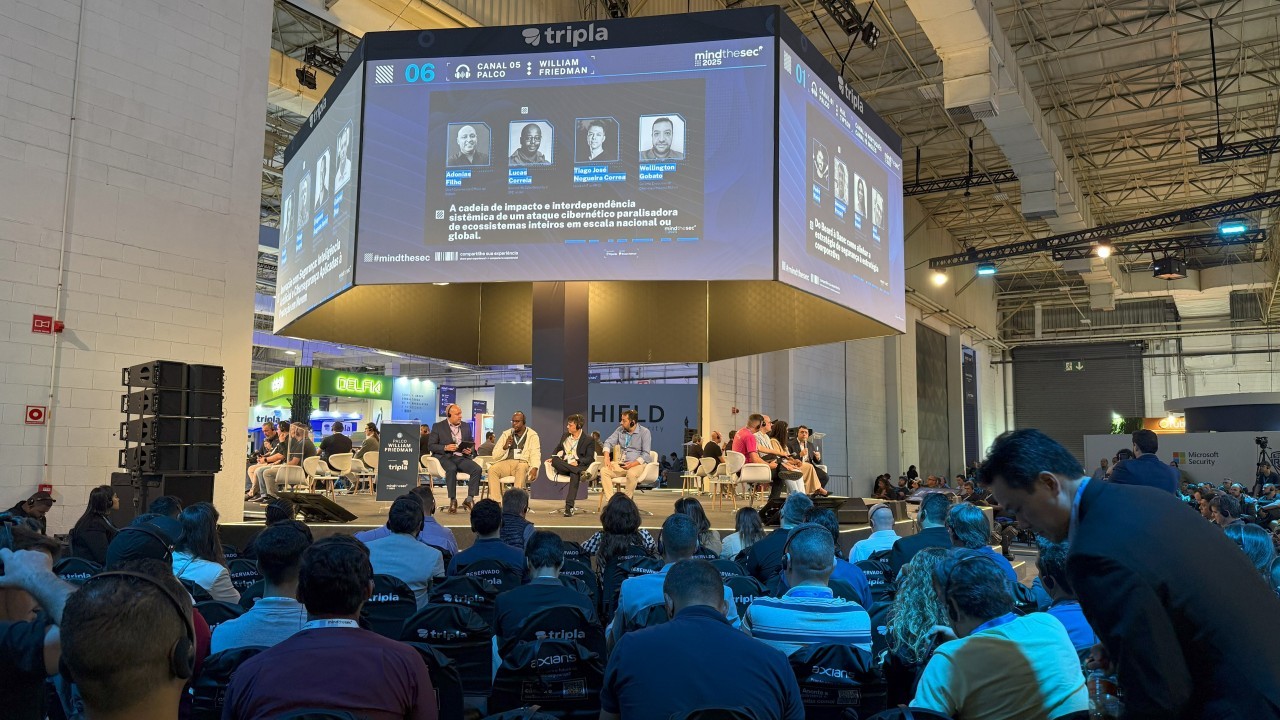
At Mind The Sec 2025 , I had the honor of moderating the panel "The chain of impact and systemic interdependence of a cyberattack paralyzing entire ecosystems on a national or global scale," with the participation of leaders from three sectors vital to Brazil: GOL Linhas Aéreas (Aviation), PRIO Energia (Oil and Gas), and Motiva (Mobility).
The debate clearly and practically demonstrated how a cyber incident in a single organization can quickly escalate into a large-scale social and economic crisis.
Interdependence and Systemic Risk
Aviation: a failure in critical systems could paralyze flights across the country, affecting not only passengers but also the logistics of essential supplies such as medicine and food.
Energy: attacks on the production and distribution chain can disrupt electricity and fuel supplies, with immediate repercussions for hospitals, telecommunications, transportation, and even international geopolitical agreements.
Mobility: a disruption in tolls, ticketing systems, or traffic control can generate immediate physical chaos, impacting millions of people and disrupting supply chains.
These examples make it clear that the resilience of one sector depends on the resilience of all the others.
Intersectoral Collaboration: The Key to Resilience
The main message from the panel was the importance of structured collaboration between companies, sectors, and regulators.
Creating permanent forums for sharing threats and best practices.
Development of joint response protocols for crises on a national scale.
Cooperation in shared defense strategies, pooling resources and intelligence.
In the current scenario, no organization or sector is isolated. The weakest link can compromise the entire ecosystem.
Regulation, Oversight, and Simulations.
In addition to collaboration, it is urgent to move towards modern regulation and active oversight.
Defining minimum safety standards.
Periodic audits to ensure continuous maturity.
Agile and confidential reporting protocols to accelerate incident response.
Another key point was the importance of simulation exercises (tabletop exercises). They allow for anticipating communication failures, testing response flows, and aligning critical sectors before a real attack occurs.
Conclusion: A Call to Action
The panel left an unequivocal message:
Information security needs to be treated as a matter of national and social defense.
We are all connected. If one sector fails, we all feel the impact. Therefore, building a resilient digital ecosystem requires:
Active collaboration between critical sectors.
Modern regulation and oversight.
A culture of continuous resilience within organizations.
More than just surviving attacks, companies that prepare gain a competitive advantage, strengthen their reputation, and consolidate public trust.
The digital future will only be secure if it is built collectively, in an integrated and strategic way.